

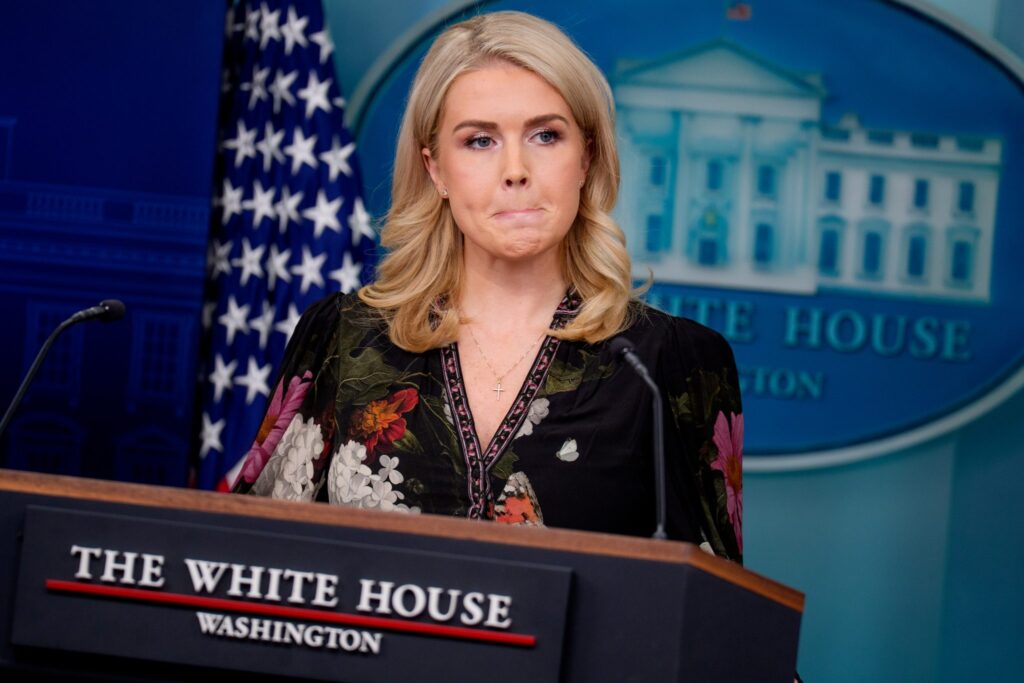
At 28, Karoline Leavitt has quickly become one of the most visible figures in the White House briefing room. Supporters see her as energetic and disciplined; critics view her as fiercely combative. Either way, she has been hard to ignore.
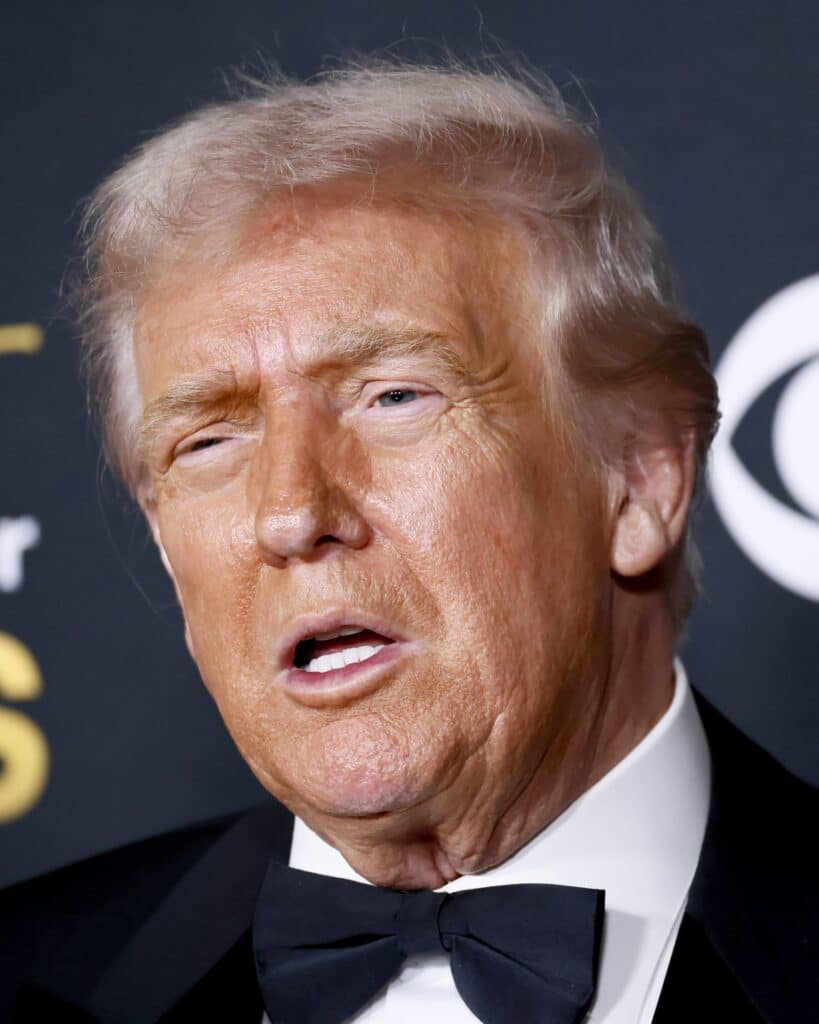
Now she’s back in the headlines—this time because of comments made by her boss, Donald Trump, 79, during a rally in Mount Pocono, Pennsylvania.
The Remarks That Sparked Reaction
Speaking to supporters on December 9, Trump praised his press secretary from the stage.
“We even brought our superstar today, Karoline,” he told the crowd. “Isn’t Karoline great?”
He then added comments that quickly drew backlash online, referring to her “beautiful face” and “those lips that don’t stop-op-op-op, like a little machine gun.”
The remarks were framed as praise. Trump linked her on-camera confidence to what he described as strong administration policies, arguing that her job is easier because she is defending positions he believes are popular with his base.
But while the tone was complimentary, the focus on her appearance—particularly her lips—triggered immediate criticism.
Strong Public Reaction
On social media platform X, multiple users described the comments as inappropriate for a workplace setting.
Some labeled them “disgusting,” while others argued that reducing a senior official to her physical features undermines her professional role. Critics questioned whether such language would be acceptable if directed at a male staff member.
Others defended the remarks as typical of Trump’s rhetorical style—blunt, hyperbolic, and personality-driven. Supporters have often argued that his language at rallies is meant to energize crowds rather than adhere to traditional political decorum.
The divide mirrors a broader pattern: Trump’s public speaking style consistently draws both strong approval and strong condemnation.
Not an Isolated Moment
This is not the first time Trump has commented publicly on Leavitt’s appearance. In previous interviews and informal exchanges, he has made similar remarks about her facial features and delivery style, often describing her as a “star” on television.
Each instance has reignited the same debate—whether such praise crosses professional boundaries or simply reflects Trump’s personal communication style.
The Broader Context
The controversy comes amid renewed scrutiny over Trump’s language toward female reporters. In recent weeks, he has been criticized for calling a Bloomberg correspondent “Quiet, piggy” and referring to a CNN reporter as “nasty” and “stupid.”
For critics, the pattern reinforces concerns about how women in media and politics are addressed. For supporters, these episodes are viewed as examples of Trump’s longstanding confrontational relationship with the press.
Leavitt’s Response
So far, Karoline Leavitt has not directly addressed the rally comments. She continued posting about the event and other White House activities without acknowledging the controversy.
Publicly, she has maintained a confident presence and has not indicated discomfort with previous remarks about her appearance.
Recently, she also discussed her personal life on the podcast Pod Force One with Miranda Devine, speaking candidly about her marriage and the challenges of dating men her own age. Her husband is 32 years older than she is—a topic that has drawn separate media attention.
A Continuing Debate
At its core, the situation raises a familiar question in modern politics: where is the line between praise and objectification?
Some argue that focusing on a woman’s physical traits—even in a flattering way—diminishes her professional credibility. Others believe that intent matters and see the remarks as enthusiastic, if unfiltered, support.
As with many moments involving Donald Trump, reactions depend heavily on perspective.
One thing is certain: in today’s political climate, even a single sentence from a rally stage can ignite a national conversation.


