
The Morning the Silence Broke: A Search Warrant and a Community on Edge
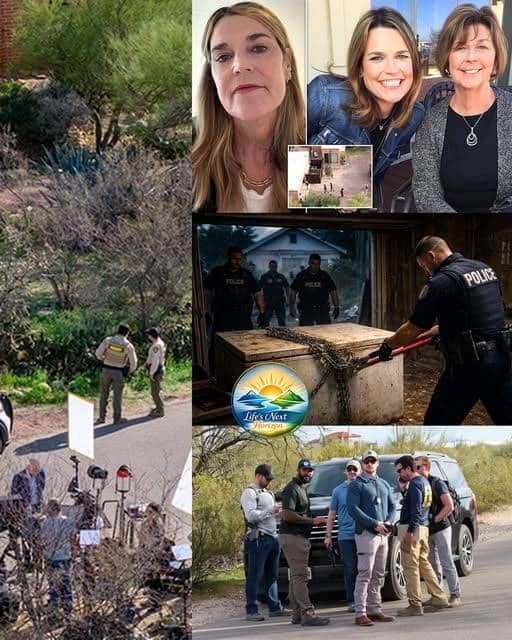
The desert sun had barely risen over Tucson when the stillness of a suburban street was interrupted by the heavy rhythm of tactical boots. For months, Nancy Guthrie’s disappearance had weighed on neighbors like a quiet storm cloud—never loud, but never gone. That morning, investigators arrived at a property once connected to her son-in-law, carrying a court-approved warrant and a burden of unanswered questions.
What began as a missing-person case had already tested the patience and faith of the community. Now, it entered a more serious phase.
Inside the Vacant House
The house stood empty, its windows reflecting early light without warmth. Inside, forensic teams moved slowly and methodically. Each room was examined with care—floors, walls, fixtures—everything documented, everything preserved.
The kitchen and bedrooms offered little at first glance. Surfaces appeared cleared. No obvious signs of struggle remained. But investigations are rarely about what is visible. They are about what lingers.
It was the garage that drew attention.
The Freezer in the Corner
In one corner stood a large chest freezer. It appeared ordinary—until investigators noticed the chains and padlock securing it.
Precautions like that are uncommon for typical household storage.
Photographs were taken. Evidence markers were placed. The chains were cut only after documentation was complete. Law enforcement later described what they found inside as “deeply disturbing,” though officials have not publicly released specific details.
And they shouldn’t.
In moments like this, restraint matters. Respect matters. Sensationalism serves no one.
When Suspicion Turns Into Evidence
From that point forward, the investigation shifted from theory to forensic reconstruction.
Teams collected:
- DNA samples
- Microscopic fibers
- Chemical traces
- Tool mark impressions
- Digital device data
Each fragment tells part of a story. But fragments must be handled with care.
Justice is not built on shock. It is built on precision.
Authorities began narrowing timelines—analyzing when the property was last accessed, reviewing digital communication records, and tracing movements connected to the location.
A Community Wrestling With Betrayal
For the people of Tucson, this was more than a headline. It was personal.
Neighbors who once exchanged casual greetings now found themselves confronting a harder truth: harm often does not come from strangers in shadows. Sometimes it grows quietly behind familiar doors.
The earlier ransom notes and unusual communications had already unsettled the case. This discovery intensified those fears.
But fear must not replace fairness.
An investigation is not a verdict.
Truth, Accountability, and the Weight of Evidence
It is tempting in moments like these to rush to judgment. To fill gaps with assumptions. To let outrage guide conclusions.
But truth requires patience.
If wrongdoing occurred, it must be proven through evidence—not speculation. If someone is responsible, accountability must come through lawful process—not public anger.
Sacred principles remind us:
Justice without restraint becomes vengeance.
Mercy without truth becomes weakness.
Balance is strength.
What This Moment Teaches
Beyond the forensic details, this case reminds us of deeper realities:
- Trust is fragile.
- Families can carry unseen fractures.
- Evil often hides in ordinary places.
- Truth eventually surfaces—but often slowly.
And most importantly:
No crime remains hidden forever.
Time and persistence reveal what secrecy tries to bury.
Moving Forward With Dignity
As investigators continue their work, the focus must remain on:
- Respecting the victim
- Preserving evidence integrity
- Allowing due process
- Protecting innocent parties
- Seeking justice without spectacle
Nancy Guthrie’s story deserves dignity—not dramatization.
Communities deserve clarity—not chaos.
And if someone is responsible, justice will come not through noise—but through lawful accountability.
Conclusion: When Silence Breaks
That morning in Tucson marked a turning point. The search moved from uncertainty toward evidence. The quiet street became part of a larger story—one that now unfolds through courts, science, and truth.
The chains were cut.
The freezer opened.
The investigation deepened.
But in the end, justice is not about shock.
It is about truth standing in daylight.
And daylight always comes.


