
Source: Reddit
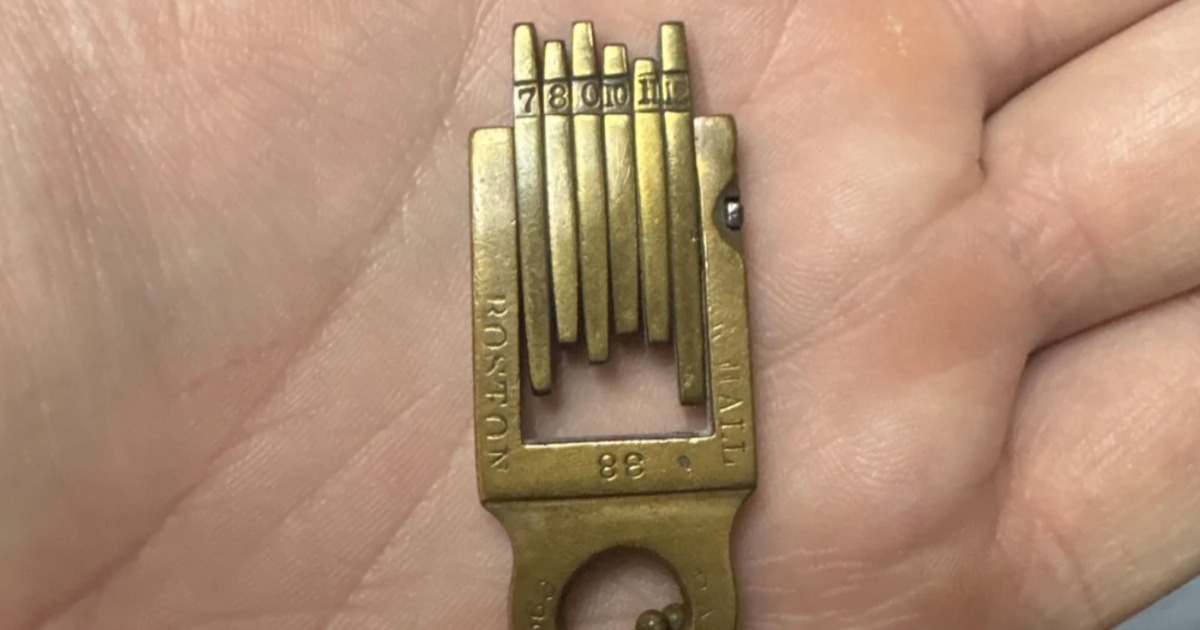
I picked this object up assuming it was some type of gauge, possibly a steam gauge from the 1800’s, given the heavy weight, 12 marked tabs (thickness gauge), and the small pin on the side. It was after seeing the words “PATENT 1863” did I stop trying to figure out what it was.
It turns out it is a 1863 W. Hall brass combination lock, patented in Boston in the middle of the Civil War. Once I realized that, the whole thing made perfect sense, and also became far more interesting.
What This Combination Lock Is
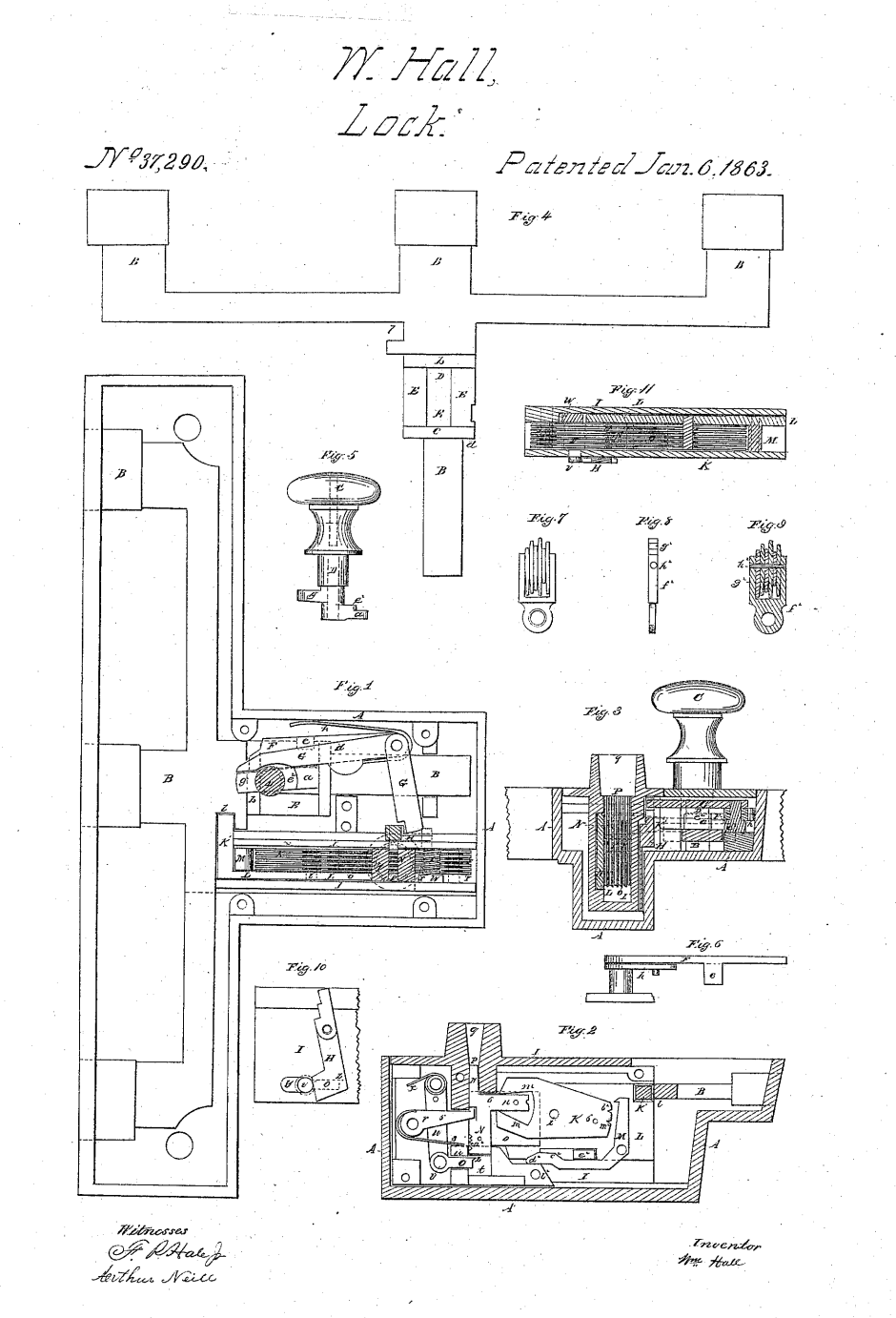
This combination lock was patented by W. Hall on January 6, 1863 as U.S. Patent #37,290. It is a compact, solid brass combination lock designed to secure small items such as lock boxes, trunks, or travel cases. The loop on the top of the combination lock suggests that it was intended to be used with the lock being attached to the item rather than the lock being built into the item.
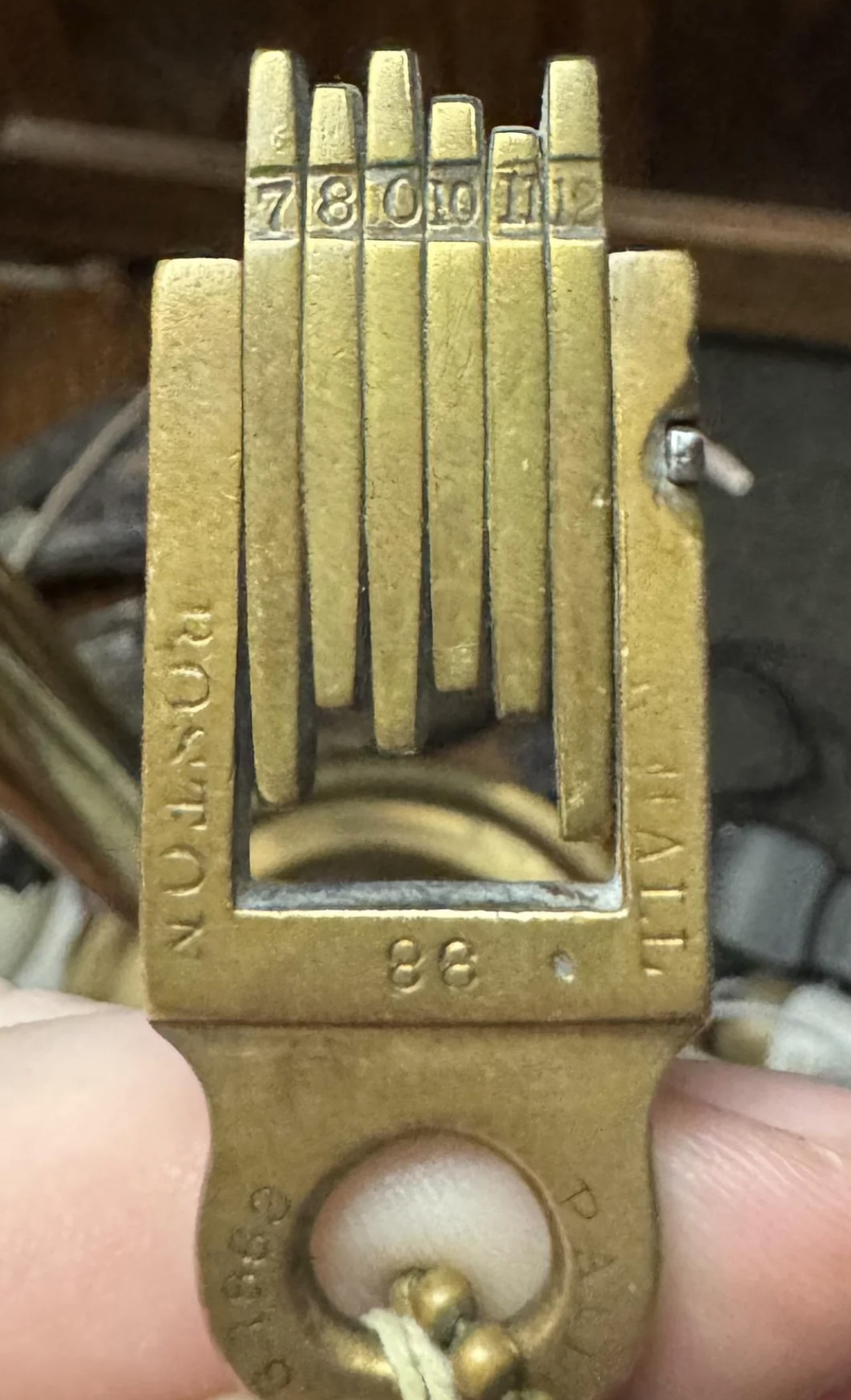
As opposed to using a key or a rotating dial, the combination lock utilizes the 12 flat brass tabs, each tab having numbers on them. Each tab will slide or pivot slightly depending upon how much pressure is applied. On the inside of the combination lock there is a notch cut into the face of each tab. Once all of the correct tabs are positioned in the proper sequence the notches on the tabs will line up allowing the internal bolt to move.
If even one of the tabs is not in the proper position the combination lock will remain locked.
How The Mechanism Of The Combination Lock Works
The entire mechanism of the combination lock works based upon alignment. There are no springs or gears. The combination of the tabs provides the combination to open the combination lock. The side pin applies tension to the system until the tabs align properly.
That is what makes the 1863 W. Hall brass combination lock so impressive. The lock utilizes precision machining, and only precision machining. The fact that brass does not wear well, is the reason why many of the existing combination locks still operate smoothly today.
I found myself spending quite a bit of time sliding the tabs back and forth to get a better understanding of how the tabs interacted. You could feel when you were getting close to aligning the tabs, and when you weren’t.
Patent Markings And Details
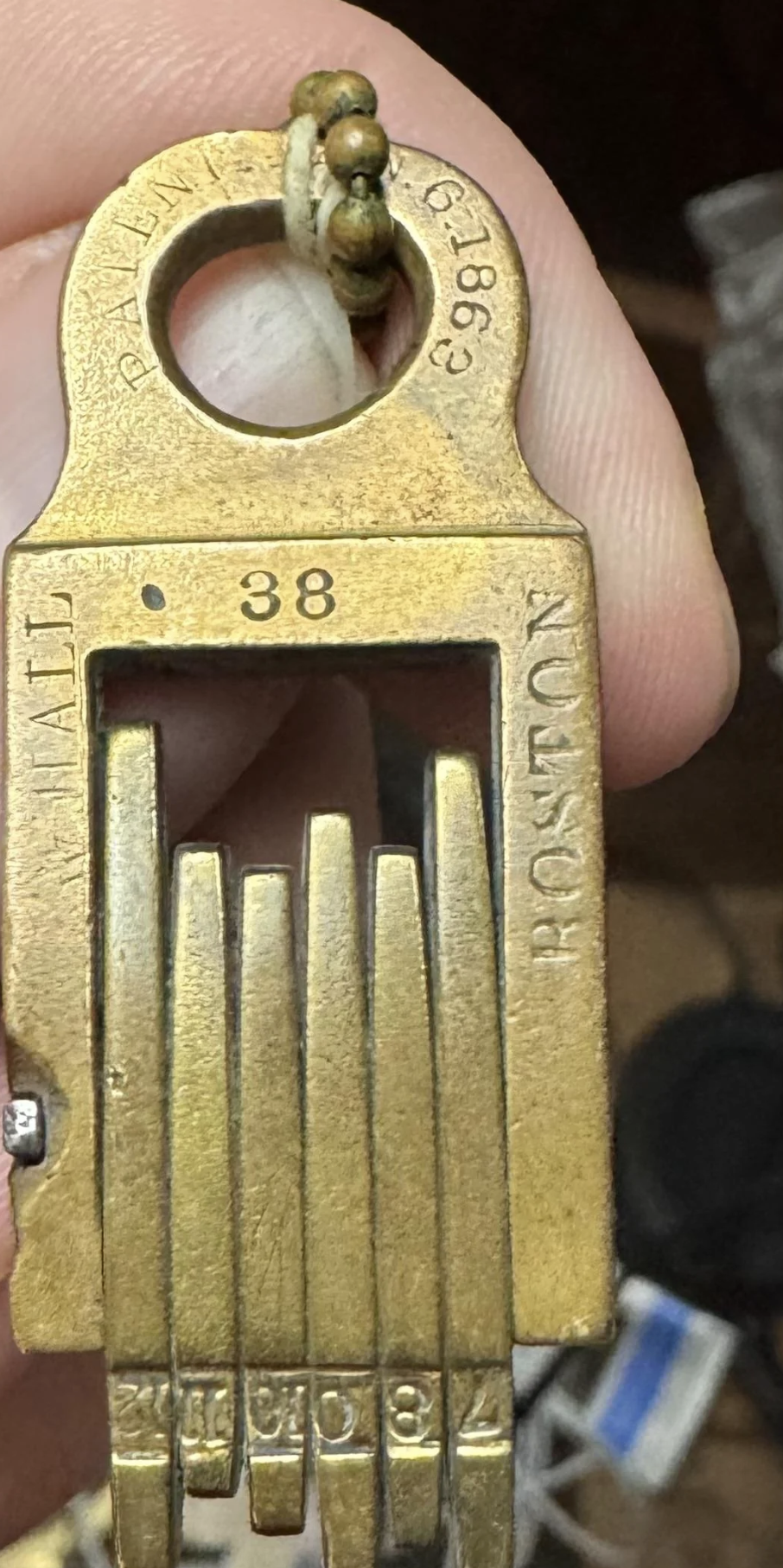
The combination lock has clear markings of “W. HALL” and “BOSTON,” consistent with the patent record. The “38” marking located near the top of the combination lock may represent a model or production number for the lock; however, there are no documented records to verify either theory.
The patent description specifically describes a compact, portable combination lock for securing items for personal safety. The construction method of this combination lock matches the patent description perfectly. Not a single decorative element exists on the combination lock. All elements are purely functional.
Why It Is Often Mislabeled
Initially, this combination lock appears to be a wire gauge or measuring device. The 12 tabs with numbers appear to be similar to a set of thickness gauges. Without knowledge of the use of the combination lock, the majority of individuals will completely miss its purpose.
That is the main reason why example of this lock are often incorrectly labeled. As soon as you have a complete understanding of what the lock is and how it operates, the design is very apparent. Until then, it seems like a mechanical puzzle.
Why Collectors Are Interested In These Locks
These combination locks represent an early step in combination based security systems. Since there was no key, there was nothing to lose or to copy. The combination existed only within the user’s mind.
Collectors are interested in collecting combination locks such as the 1863 W. Hall brass combination lock because they provide collectors with historical significance, mechanical ingenuity, and durability. While the brass combination lock will develop a rich patina over time, the operational functionality of the lock will typically survive the aging process. This is a unique quality to find in collectible items.
In addition, these combination locks serve as reminders that products manufactured in the 1860’s were manufactured to last and be functional. This combination lock was not designed to be replaced. It was designed to operate.
Final Thought
This combination lock does not visually impress unless you know what you are looking at. Once you realize what you are looking at, it is difficult to view the design without a great deal of respect. This combination lock is small, precise, and still functional more than a century and a half since it was manufactured.
The 1863 W. Hall brass combination lock does not appear impressive. It does not need to appear impressive. It performs exactly what it was designed to perform and it still performs that function.
That is usually an indication that whoever originally created it, got it right the first time.


